
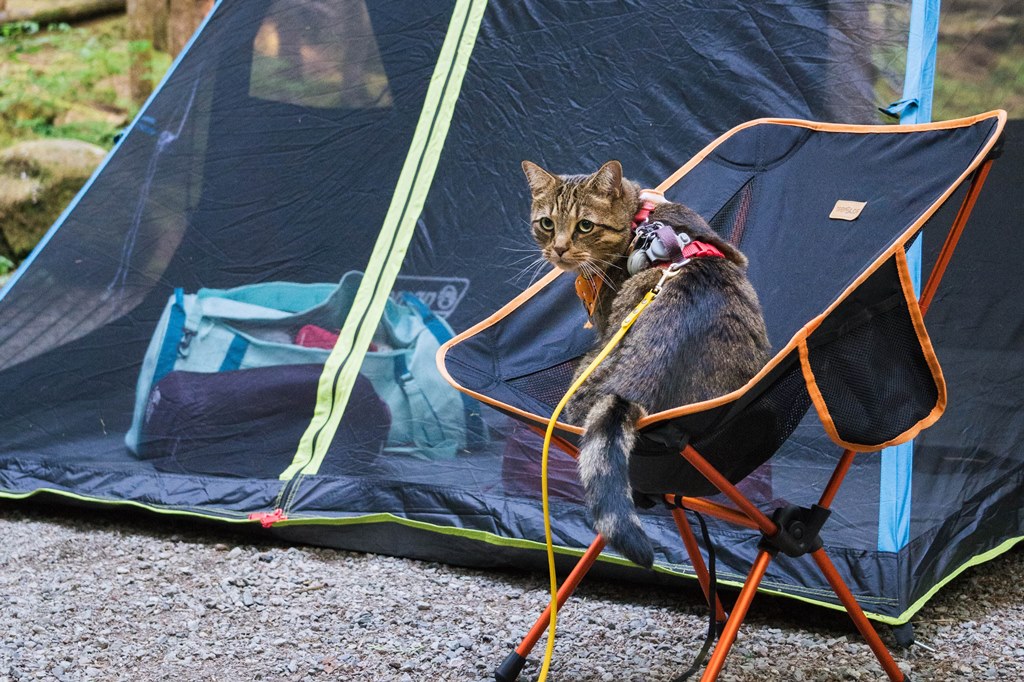
If you are thinking about taking your cat camping for the first time, but you’re not sure what you need, or how to start, this is the place for you! This post will be a complete guide to how you can start camping with your cats. Camping is a great activity for your cats, since it involves a lot of hanging around one area, which is what they like to do naturally. In this post, I will be focusing on tent camping, but if you’re camping in a van, RV, or trailer, it would be even easier as you won’t have to worry about them trying to escape as much! Continue reading to find out more about how you can bring your cats camping with you.
If you’ve never brought your cat outdoors before, you will need some preparation work before going on your first camping trip. Here are some guides to get you started:
Frequently Asked Questions

Can I bring my cat camping?
The answer is yes, and you should be prepared with some training and precautions, but you should try it if its something you think your cat will enjoy. A lot of people who haven’t tried this with their cats may think the whole idea is ridiculous. I even had a park ranger tell me “good luck with that” as I was checking in. Although it may not be as common as bringing dogs, cats are actually excellent campers, as long as you are prepared and have all the safety precautions.
First of all, cats naturally like to have their own space and territory. At campsites, this is exactly what you have – a small space which is yours to call home for the night, with clear boundaries that no one else will enter. I would even argue that cats enjoy camping more than hiking, because of their natural instincts. In my experience, my cat spends most of his time sniffing around the bushes and this provides him with endless entertainment.
Secondly, camping is (usually) a very relaxing activity, where you just sit around and hang out. And this is perfect for cats, because this is also what they like doing. You don’t have to micromanage your cat all day, and you can let them enjoy nature without having to worry about getting them in a backpack or a destination.
Lastly, its because the alternative is leaving them home alone, or missing out on camping trips, when you could simply bring them along. Not every cat is suited for camping, but if you had a cat who would enjoy it, why not bring them along too!
Are campsites pet friendly?
Make sure to check if the campsite allows pets (not only dogs), and check the rules to see which areas of the park they are allowed in. For example, in BC Canada, usually pets are not allowed on beaches or picnic areas, but are allowed at the campsites, and must be on leash at all times. There isn’t any extra fees for bringing a pet.
On the other hand, pet friendly campsites means there may be dogs camping next to you. There’s no way to know this before hand, so it’s best to look for campsites that are more spaced apart, so even if there is a dog next to you, they won’t cause you much disturbance. Campers are generally respectful of other campers’ spaces, so it likely won’t be too much of an issue.
Will my cat get lost if I bring them camping?
With any outdoor activity with a cat, there is a always risk of them getting lost. The risk is significantly reduced if you cat is harness and leash trained, and kept close to you at all times. Do not treat the campsite like your backyard and allow cats to wander around unsupervised. For extra safety, there are trackers you can put on their harness (personally I prefer the Apple AirTag).
Never leave your cat alone at the campsite during the day (unless you have a climate controlled RV or trailer). You will have to change your plans to cat inclusive activities only, and this generally means no water activities or long hikes.
Will my cat destroy my tent / sleeping bag?
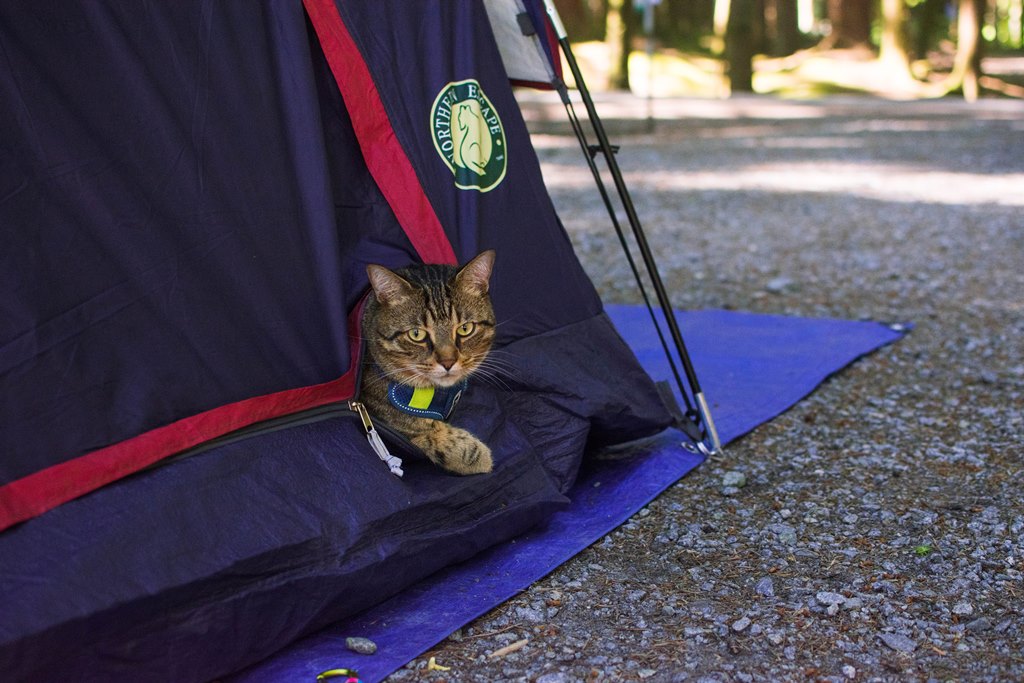
A fear that a lot of cat owners have is that their cat will scratch at their tents and inflatable sleeping mats. Some cats are more prone to scratching than others, so this is something that you will have to judge for yourself. In general, most tent materials are fairly slippery and wont snag on claws, however, the mesh is a little more delicate and may start to become damaged if your cat is particularly destructive. One tip is to make sure your cat is able to see out of the tent, and this may satisfy their curiosity and not paw at the tent as much. I usually bring a small chair or table, and let them sit on it to see out the windows. You should expect to have to monitor and move your cat away from the tent doors.
The material is also a factor, and cats are more interested in scratching closed foam sleeping pads rather than the inflatable sleeping pads, but again, it depends on the cat. If you are concerned, you could cover the sleeping pad with a blanket.

How do I know when my cat is ready to try camping?
Going camping for the first time can seem intimidating! Here are some indications that your cat may be ready for their first camping trip:
- They are leash and harness trained, meaning they are comfortable with a harness and doesn’t try to slip out of it.
- They have travelled with you to new places and don’t seem too stressed out with outings.
- They have spent overnight at new places and is generally fine with the idea of sleeping outside their home.
What Gear Will You Need?
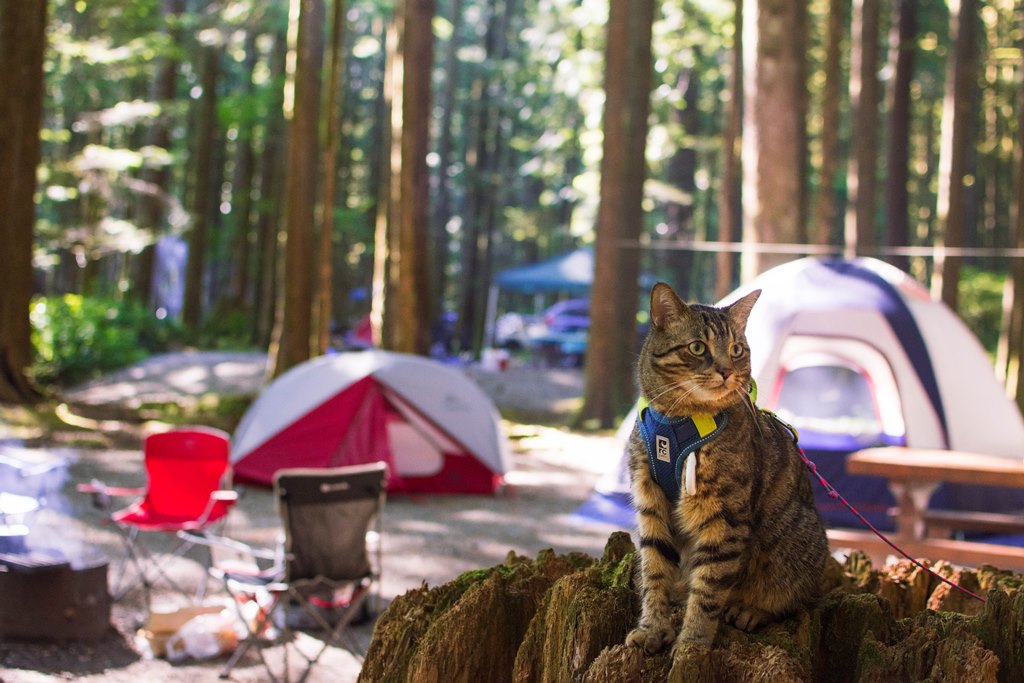
* Please note that some of the links below are affiliate links. As an Amazon Associate I may earn a commission from qualifying purchases. This will not affect the price of your purchases.
Tent
When purchasing a tent, try to make sure that the tent doors have double zippers (which you can clip together), or that they open from the top. This way, your cat will not be able to open the doors up themselves. You should also try to get tents with less mesh on the lower half, so your cat won’t be able to claw at the more delicate mesh material. For the size, you’ll want to go at least “1-person” size more than the number of people that will be sleeping in the tent. For example, when I am sleeping with only myself and my cat, I will use a 2-person tent at the minimum. This way there will be enough space for your cat’s things such as their litter box. You can also go even larger than that, and there’s really no limit other than the campsite space and your ability to set it up.
These are the tents I personally own and use:
MSR Elixir 2 (2-person tent): Amazon USA / Amazon Canada
Coleman Carlsbad Darkroom Tent with Screen Room (6-person tent): Amazon USA / Amazon Canada
Harness
A harness is absolutely essential in any outdoor cat activity. You’ll want to have a good harness that you and your cat are used to, and you can trust to be secure. You’ll also want to make sure to spend some time harness training your cat, so they accept the harness instead of trying to escape the harness.
A light up collar or keychain is also an essential item, as it gets very dark in the woods. It helps you locate your cat quickly even if they are hiding in a nearby bush.
If you are looking for a new harness, check out this blog post: Best Cat Harnesses 2022
Leash System or Enclosure
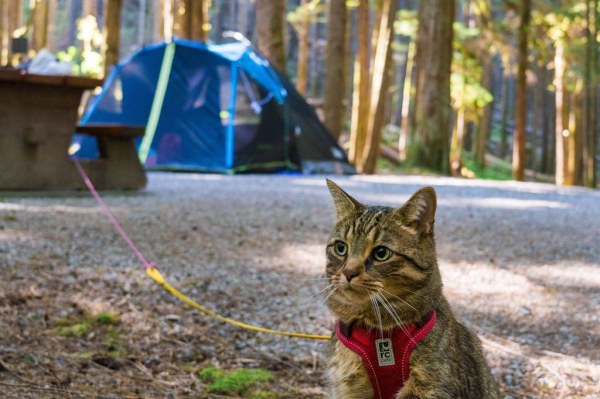
You will need a method to secure your cat at the campsite, either with a long leash, or an enclosure. Most campsites require that pets are secured at all times, and this will prevent your cat from getting lost.
The first option is a long leash line, tied to a tree or picnic table. The long line provides your cat with more freedom, but requires more supervision because it is prone to getting tangled as your cat weaves and jumps around things. There are many options for a long leash, which you’ll find in the dog training section of pet stores. If you are looking for an inexpensive DIY option, I use a 15ft paracord and two S-biners (Nite Ize S-biner: Amazon USA / Amazon Canada) tied to either end.
Alternatively, you could bring an enclosure for your cat to stay in. Options for enclosures includes large crates, playpens, and portable catios. The downsides of enclosures is they don’t allow your cat to interact with the environment, which can be frustrating for them. Enclosures are also more bulky to pack and bring to the campsites, but can be safer to prevent your cat from escaping.

Cat Food
Cat food which are easy to feed while travelling include kibbles, freeze dried food, and single serve pouches. Canned foods tends to be more messy and if you don’t have a cooler or refrigerator, you won’t be able to store the unused portions. Make sure to put away all cat food and treats before sleeping, if you are camping in bear country.
Litter Box
A travel litter box to keep inside the tent overnight is a good idea, as cats are generally used to having access to a litter box at all times. It is a good idea to switch your cat to unscented litter before your camping trip, so your cat has time to get used to it. Unscented litter is important if you are camping in bear country, but may not be an issue elsewhere.
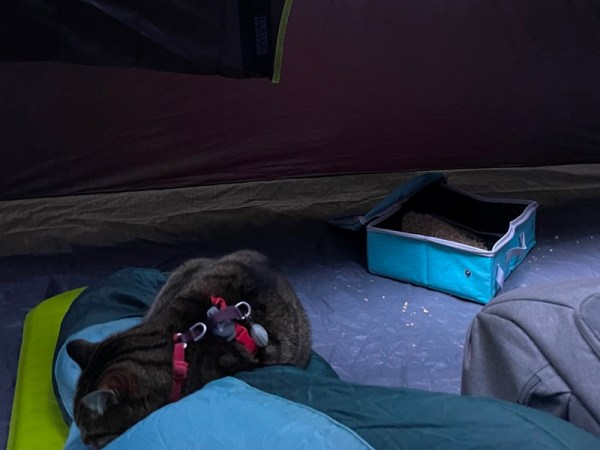
Lastly, for your first camping trip with your cat, I recommend you to find a spot that is closer to home, and for a single night only. This way, if it all goes badly, you can either pack up and go home in the middle of the night, or spend one miserable night and know what you need to improve on for next time.
Good luck!
 Theoretically Teddy