
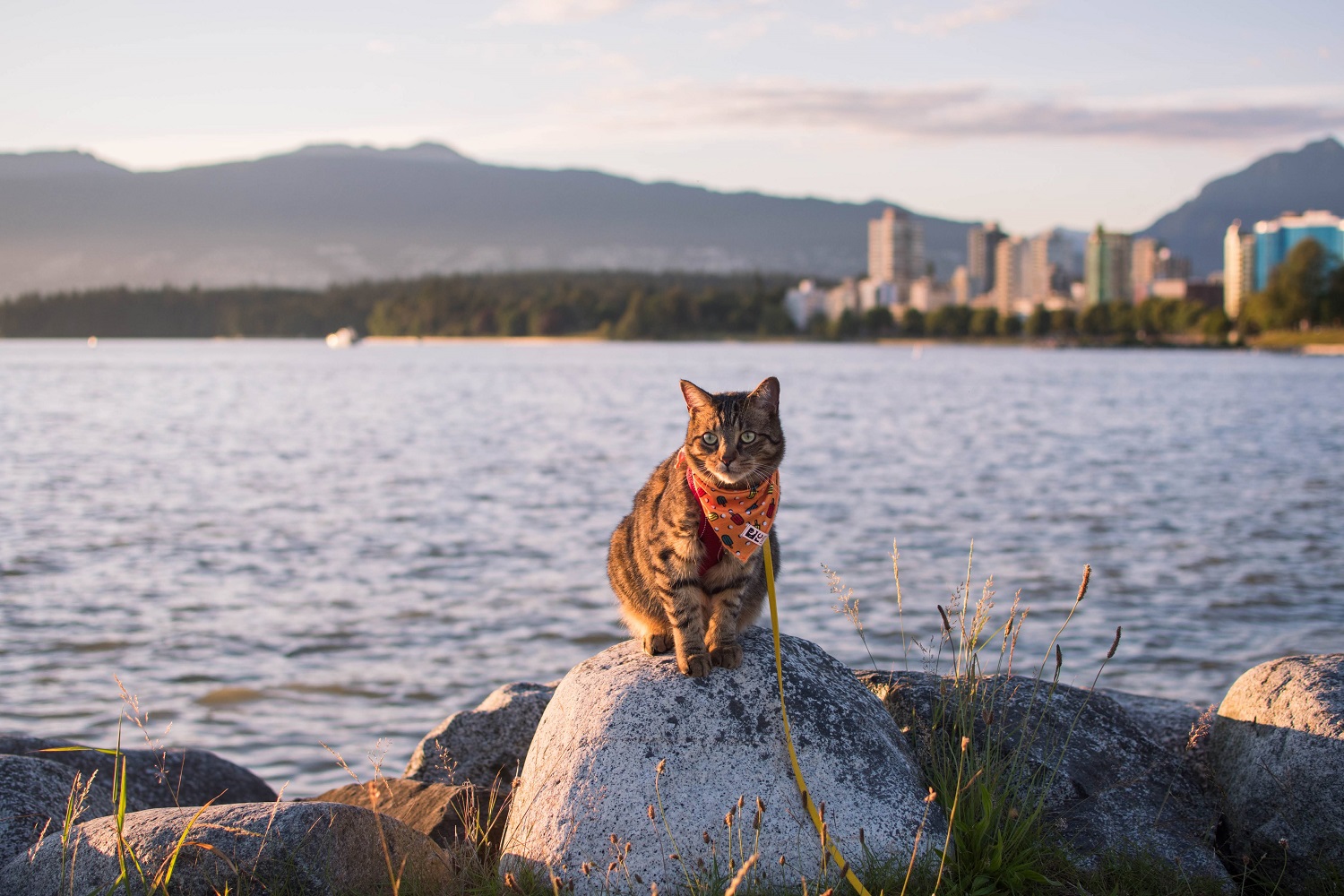
We’ve flown on planes many times, but with a cat it seems like a totally different experience! It is a little more challenging, and takes a little more time, but I’m here to show you that its not all that difficult! Knowing what to do and expect is half of the anxiety that comes with travel so keep reading to find out more!
Note that this is based on domestic flights within Canada.
- Before Heading to the Airport
- Litter Box Preparation
- Checking In at the Counter
- Going Through Security
- Boarding the Plane
- Flying on the Plane
Before Heading to the Airport
Make sure you are prepared to fly and you have packed everything you’ll need for your cat on your trip, including food, treats, and medication. You should also have reserved your cat on the plane along with your booking. You can online check-in to your flight, but you’ll be instructed to visit a counter when you arrive to the airport for a printed boarding pass.
For a more detailed guide, check out: How to Prepare Your Cat for Air Travel
Here’s a checklist of what you need:
Please note that some of the links below are affiliate links. As an Amazon Associate I may earn a commission from qualifying purchases. This will not affect the price of your purchases.
- Reserved and paid for your pet on the flight
- Carrier that fits the airline’s dimensions
Link: Recommended carriers - Medication for your cat (if needed)
- Harness and leash on your cat
Link: Recommended harnesses and recommended leashes - Collar, ID, and airtag (optional)
- Treats and food (depending on how long your travel day is)
- Foldable litter box and quart sized bag of litter (optional)
Link: Recommended travel litter box

Litter Box Preparation
Litter box access will be limited during your day of travel, so it would be best if your cat doesn’t need it during the trip. One way to reduce their need is to restrict food and water. This would depend on how long your day of travel is, because we don’t want to starve or dehydrate our cats. This will also depend on how often your cat uses the litter box usually. For reference, my cat only goes 1-3 times a day, so for a 1 hour plane ride, I will feed my cat as usual, and for a 4 hour plane ride, I will feed him half his meal before the flight.
You can also use puppy pads (Amazon.com / Amazon.ca) to line the inside of your carrier for easy clean up if you are worried they will have an accident. The puppy pads will absorb all the liquid, and you’ll just have to throw it away and replace with a new one. I tried this once but it didn’t work for my cat as he likes to dig at the sides to try and get out of the carrier, so I typically don’t do this, but it would be useful for more mellow cats.
You can bring a foldable litter box and a ziplock bag of litter if you think your cat won’t be able to hold it for the duration of travel. For longer flights or when you have connections, I would highly recommend this. Keep in mind that whole going through security, litter sometimes counts towards a limit, and I’ve been told the limit is 1 quart sized bag per person. (Tip: Bring pellet litter, which does not count towards the sand limit.) You’ll be able to set the litter box up in quiet areas of the airport, single occupancy washrooms, or at the pet relief areas.
Checking In at the Counter
You will need to line up at the counter to receive your boarding pass when travelling with a pet. This is so the gate agent can check your pet and carrier. As there may be a line at the check in counter, you should aim to arrive around 30mins earlier than usual.
Going Through Security
You will need to take your cat out of their carrier, and put the carrier through the metal detector machine. You do have the option of requesting a private screening room, and I would recommend this for skittish cats, cats who aren’t used to being outside their home, or cats who don’t like being held.

The best approach to the security screening is to send all your luggage through the machine, then take your cat out of the carrier, and send the carrier through. You’ll then hold onto your cat while you walk through the x-ray machine and get your hands swabbed. Then wait for your luggage and carrier to appear through the other side.
Tip: put your cat in a thin, plastic only, minimal harness, and do not take this off. If the agents ask you to, you can explain that there is no metal, and you don’t want to take this off for safety.
The entire process involves holding onto your cat for around 2-3 minutes and for this reason, if your cat doesn’t like to be held for this long, it may be better to request the private screening room. Keep in mind that this will add more time, especially if the airport may be short staffed. On the other hand, I’ve found that my cat is a little more timid and willing to be held, as the environment is a little scary for him and he sort of clings onto me.
Boarding the Plane
When travelling with a pet, you have the option to request for priority boarding, if you prefer to board first. It’s an option similar to families travelling with young children. If your prefer to board first, take the overhead bin space, and let your cat settle down, while waiting for the rest of the plane to board, you can go ahead and try for priority boarding (not guaranteed but worth a try).
However, I actually prefer to board last. This is because my cat really hates being in his carrier, and I prefer to not add the extra 30-45 minutes waiting for everyone else to board. I will be at the gate, to make sure I don’t miss the flight, but I will ignore when they call for Zone 3 boarding or whatever, and just board last. Keep in mind that this usually means you won’t have any overhead space, so I typically only do this if I am travelling with other people who can take my carry on and board first, or if I’ve checked in all my luggage and am travelling with only a purse and the carrier, so I don’t need any overhead space.
Flying on the Plane
Once you get on the plane, the rules are you must keep your pet inside their carrier, underneath the seat in front of you. In general, Canadian flights won’t allow you to take your pet out of their carriers, and some will even say you can’t open it or take the carrier out from under the seat. It all depends on the flight crew that day and how lenient they are.

Here are somethings I’ll do to quieten my cat down:
- Reach into the carrier and pet them
- Place the carrier on my lap or the seat next to me, so they feel closer to you
- Give them treats (in particular churu treats)
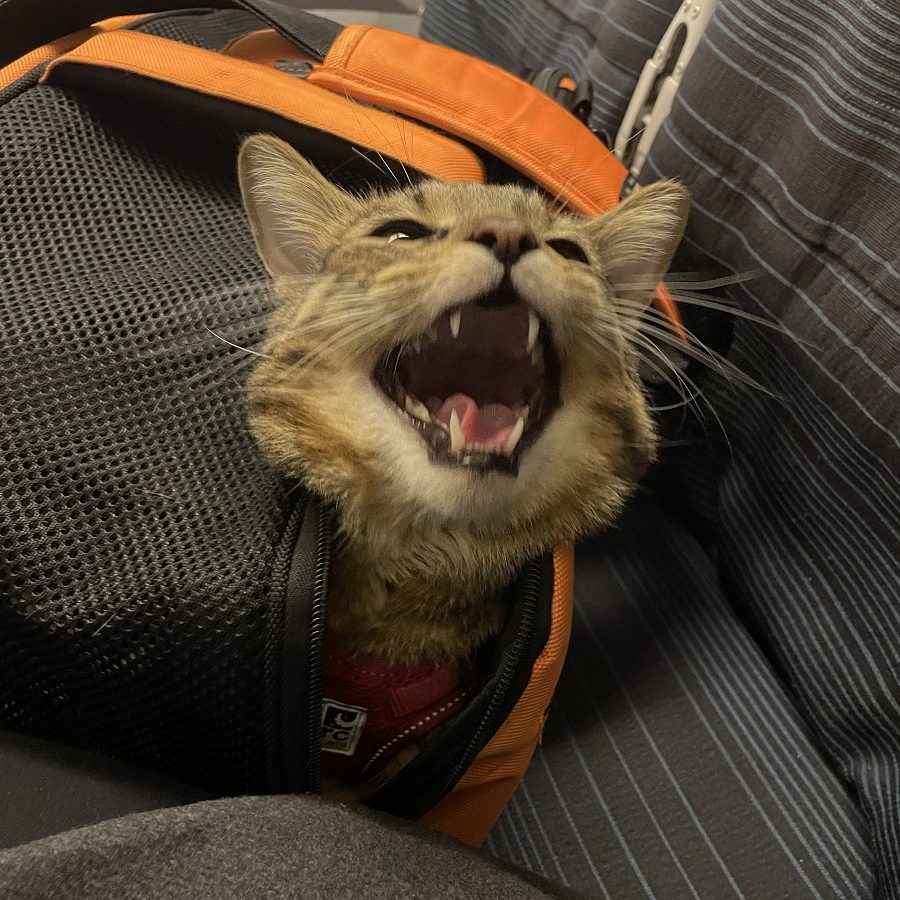
- Open the carrier but keep all parts of the cat inside. This one worked the best for my cat, but its a real struggle fighting to keep the cat inside the carrier when they want to come outside. Some flight crew will allow this (as long as all parts of the cat is still inside the carrier), and some will say you can’t even open the carrier.
If despite your best efforts, your cat is still meowing, there’s nothing more you can do about it. Because the plane engine is fairly loud, only the closest few rows can actually hear your cat. Also, if there are any babies on board, they’ll hopefully drown out your cat too. There’s really nothing you can do except apologize to the people sitting around you, and hope it will be over soon.
Good luck!
 Theoretically Teddy
One thought on “Flying with a Cat – Navigating Air Travel with Your Furry Feline”